Spirulina: Full Spectrum Nutrition from Water and Sunlight
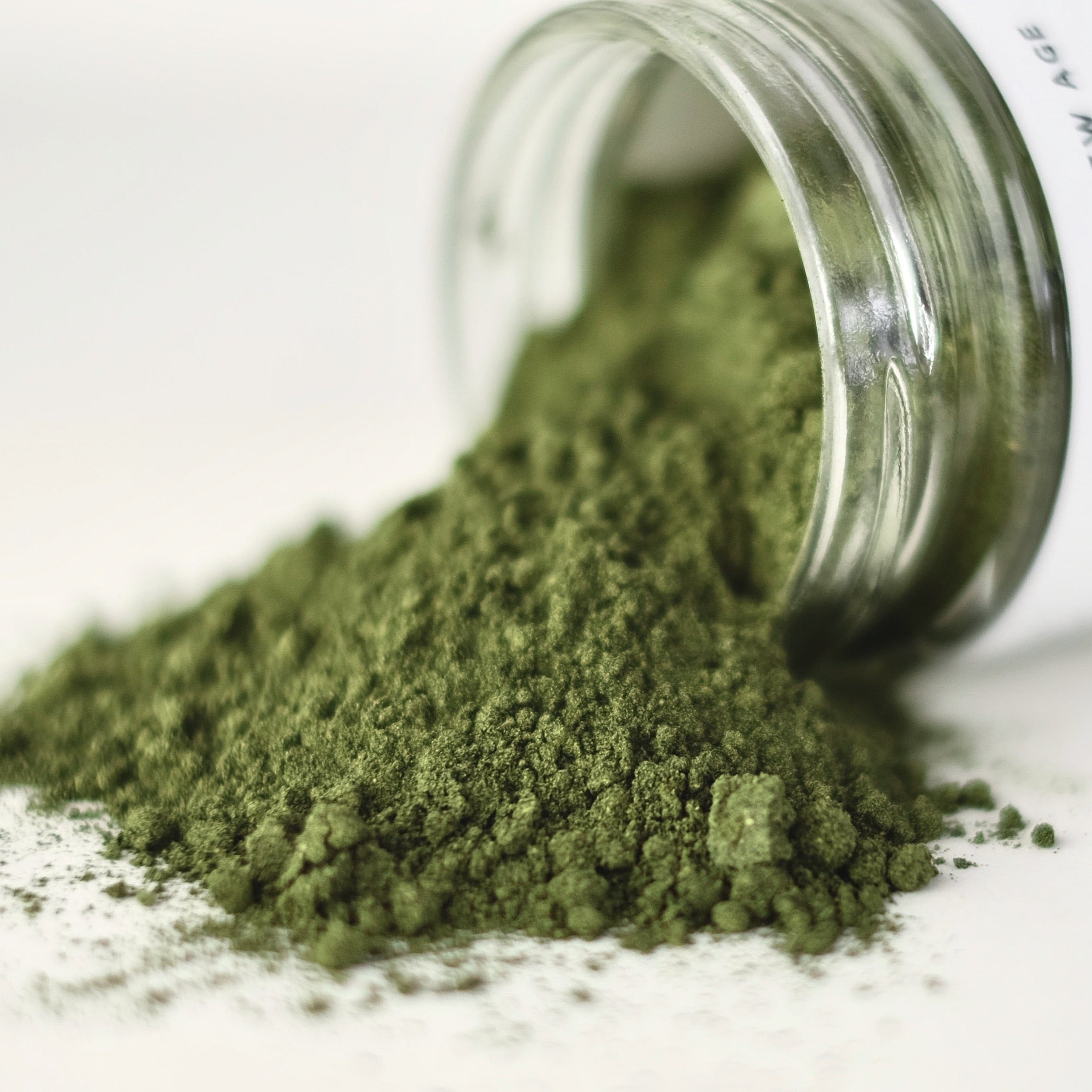
There are not many substances in the natural world as powerfully nutritious as spirulina—a deep blue-green powder that looks almost otherworldly, yet has nourished human beings for centuries. Suspended between water and sunlight, earth and sky, it is less a plant than a living bridge: a microscopic organism that transforms light into nourishment with astonishing efficiency.
What Is Spirulina?
Spirulina is a type of cyanobacteria (often called blue-green algae, though technically not a true algae). It grows naturally in alkaline lakes in warm climates, forming dense, mineral-rich blooms.
Unlike most plants we consume, spirulina is:
- Single-celled
- Highly concentrated in nutrients
- Exceptionally efficient at converting sunlight into protein and pigments
It is one of the oldest life forms on Earth and one of the most nutritionally dense.
A Food with Ancient Roots
Spirulina is not a modern invention. It has been harvested and eaten by traditional cultures for generations:
- The Aztecs gathered it from Lake Texcoco, forming it into cakes
- Communities around Lake Chad in Africa still harvest it today as “dihe”
In both cases, it was valued not as a supplement, but as a foundational food—something sustaining, strengthening, and practical.
Nutritional Profile: A Concentrate of Life
Spirulina’s reputation comes from its density. Gram for gram, it contains:
- 60–70% protein (including all essential amino acids)
- B vitamins, especially B1, B2, and B3
- Iron, in a bioavailable form
- Magnesium and trace minerals
- Chlorophyll, the green blood of plants
- Phycocyanin, its signature blue-green pigment with antioxidant properties
It is not just nourishing—it is intensely so, like a distillation of sunlight and water.
The Mystery of Its Color
What gives spirulina its striking hue is phycocyanin, a rare blue-green pigment that:
- Supports antioxidant activity
- Gives spirulina its deep teal color
- Is being studied for immune and anti-inflammatory effects
🍃 How to Use Spirulina
Spirulina has a bold, mineral-rich taste—often described as earthy, marine, or vegetal. A little goes a long way.
Simple ways to incorporate it:
- Blend into smoothies with fruit and honey
- Stir into green juices
- Add to energy balls or raw desserts
- Mix into water with lemon for a quick tonic
Start small—½ to 1 teaspoon—and build gradually.
A Note on Quality
Because spirulina absorbs what’s in its environment, purity matters deeply.
Look for:
- Controlled, clean cultivation (not wild-harvested from polluted waters)
- Deep green-blue color and fresh aroma
High-quality spirulina should feel clean, not muddy or overly fishy.
🌱 Spirulina and the Future of Food
Spirulina is increasingly being looked at as a sustainable protein source:
- Grows rapidly in water systems
- Produces more protein per acre than most crops
In a world facing soil depletion and rising demand for nutrition, spirulina represents something hopeful: a way of feeding people that is light on the earth, yet rich in nourishment.