
What is Ube? History, Recipes, and Why Everyone Loves This Vibrant Purple Yam
Ube (Dioscorea alata) is having a moment. With its striking purple colour, naturally sweet flavour, and rich culinary history, ube has transformed from a beloved traditional ingredient into a global favourite found everywhere from cafés to bakeries and home kitchens.
But what exactly is ube, where does it come from, and why has it become so popular?
What is Ube?
Ube (pronounced oo-beh) is a purple yam traditionally grown throughout tropical regions, especially in the Philippines, where it has been enjoyed for generations. Unlike purple sweet potatoes, ube has a distinct flavour often described as earthy, nutty, creamy, and naturally sweet with subtle vanilla-like notes.
Its naturally vibrant purple colour and versatility have made it a staple ingredient in desserts, beverages, baked goods, and modern specialty drinks.
The History of Ube
Ube has long played an important role in Filipino cuisine and culture. Traditionally used in desserts and celebrations, ube appears in countless recipes including jams, pastries, cakes, ice cream, and sweet rice dishes.
One of the most recognizable traditional preparations is ube halaya, a thick, rich jam made from cooked ube that serves as the foundation for many classic desserts.
As Filipino cuisine gained international recognition, ube began appearing globally in coffee shops, bakeries, and specialty beverage menus, helping introduce new audiences to its distinctive flavour.
Why Has Ube Become So Popular?
Part of ube’s popularity comes from its unique combination of flavour and appearance.
People love ube because it offers:
- Naturally vibrant purple colour
- Rich, creamy sweetness
- Versatility in drinks and desserts
- Distinctive flavour unlike common vanilla or chocolate options
- Strong connection to traditional culinary heritage
Unlike many colourful food trends, ube offers both visual appeal and genuinely distinctive flavour.
Easy Ways to Enjoy Ube at Home
1. Iced Ube Latte
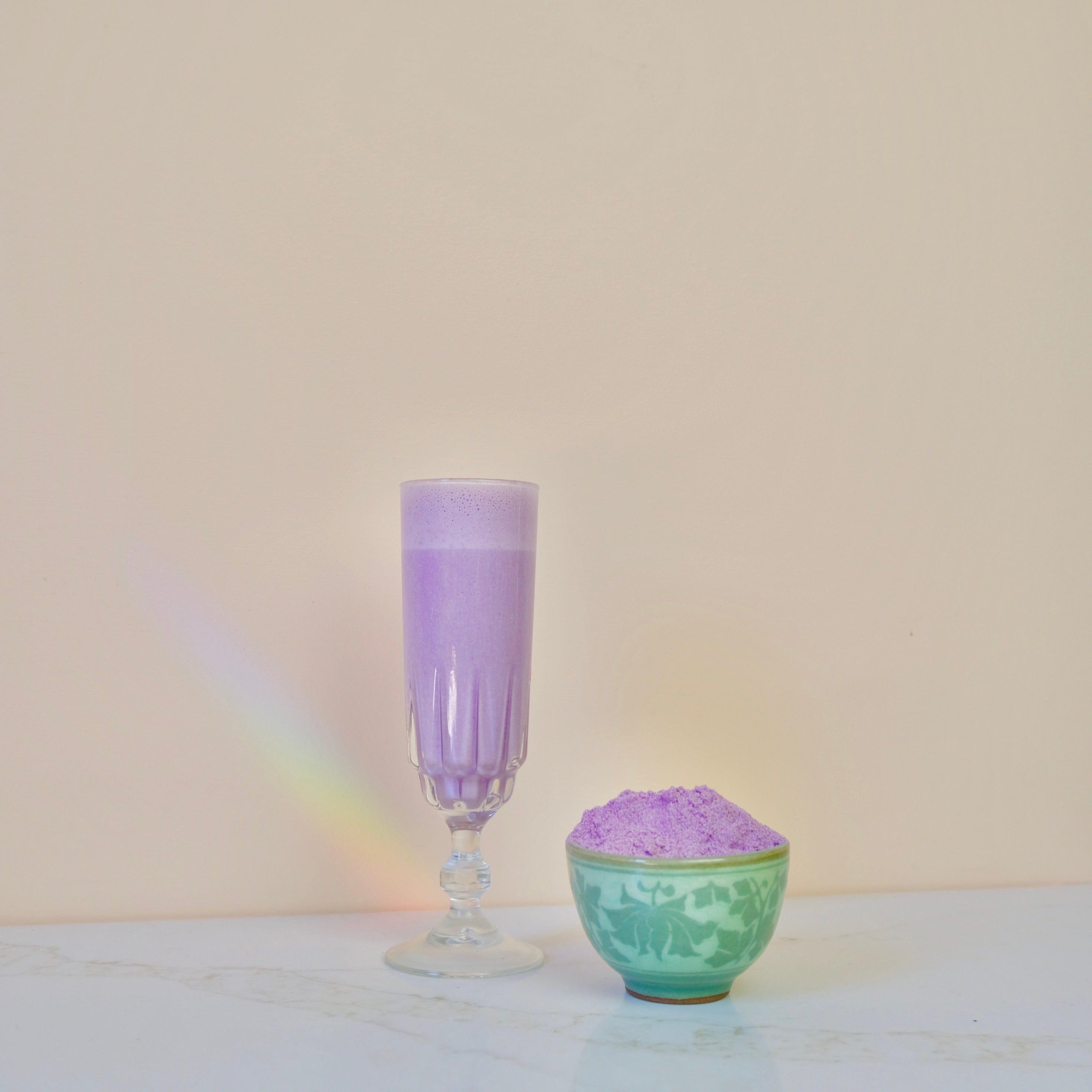
Mix Ube Milk by Immaculata Herb Farm with milk or your favourite plant-based alternative, pour over ice, and enjoy a creamy café-style purple latte.

2. Ube Coconut Smoothie
Blend:
- 1 serving Ube Milk
- 1 banana
- 1 cup coconut milk
- Ice
Blend until smooth for a tropical breakfast smoothie.
3. Ube Overnight Oats
Combine oats, chia seeds, milk, and a scoop of Ube Milk. Refrigerate overnight for a colourful breakfast with rich coconut and vanilla notes.
4. Ube Pancakes
Add Ube Milk directly into pancake batter for soft purple pancakes with subtle tropical flavour.

5. Ube Hot Chocolate Alternative
Prepare Ube Milk with steamed milk for a comforting warm beverage that combines creamy coconut, vanilla, and purple yam flavour.
Introducing Ube Milk by Immaculata Herb Farm

Inspired by traditional ube flavours, Ube Milk by Immaculata Herb Farm combines premium ube, creamy coconut milk, and smooth vanilla powder into an easy-to-enjoy drink mix.
Designed for both simplicity and versatility, it can be prepared hot or iced and works equally well in beverages, smoothies, desserts, and baking recipes.
Whether you're discovering ube for the first time or looking for a convenient way to enjoy a familiar favourite, Ube Milk makes it easy to bring vibrant flavour into everyday routines.
Ube Heaven is a Place on Earth
Ube’s journey from traditional kitchens to modern cafés demonstrates how timeless ingredients can find new audiences while maintaining deep cultural roots.
Its rich flavour, striking colour, and endless versatility make it easy to understand why this purple yam continues to capture attention around the world.
If you haven’t tried ube yet, there has never been a better time to discover what makes this remarkable ingredient so memorable.
%20is%20having%20a%20moment.%20With%20its%20striking%20purple%20colour,%20naturally%20sweet%20flavour,%20and%20rich%20culinary%20history,%20ube%20has%20transformed%20from%20a%20beloved%20traditional%20ingredient%20into%20a%20globa...)